

Walk through any modern trade show floor or shopping mall corridor and something will stop you dead in your tracks — a floating, spinning, impossible-looking image hovering in mid-air. No screen. No projector. Just a mesmerizing, full-colour 3D display that seems to defy every rule you thought you knew about visual media. That’s the reality of 3D hologram fans, and they’re reshaping how businesses connect with the people in front of them.
What Exactly Are 3D Hologram Fans?
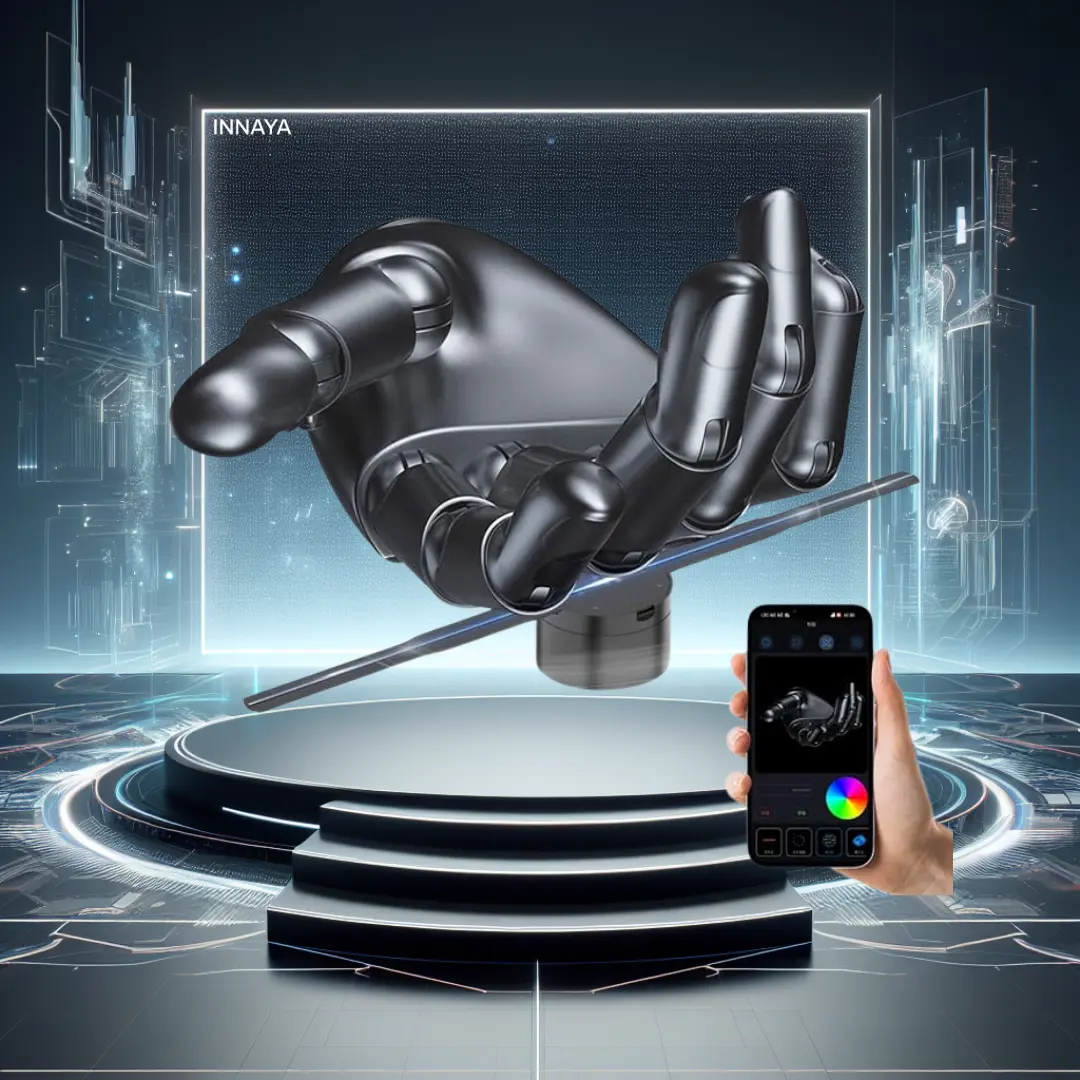
The name sounds more complicated than the concept actually is. A 3D hologram fan is a LED-based display device with rapidly spinning blades — each one embedded with tiny, precisely controlled LEDs. When the fan spins at high speed (typically over 700 RPM), those LEDs fire in such rapid sequence that the human eye blends them together into a persistent floating image. The result is a 3D-looking visual that appears to hang in open space, no glasses required, no special viewing angle needed.
The technology builds on something called “persistence of vision” — the same optical trick that makes movies work. But where cinema uses it to create the illusion of movement on a flat screen, 3D hologram fans use it to simulate depth and dimension in actual three-dimensional space. The effect is genuinely stunning the first time you see it, and it stays attention-grabbing long after that.
Why Businesses Are Making the Switch
There’s a fatigue that’s set in around traditional advertising formats. Banners get ignored. Static signage blends into the background. Even digital screens have become wallpaper to most people. 3D hologram fans cut through that noise in a way that feels almost unfair — because the human brain simply isn’t wired to ignore a floating holographic image.
Retailers are using them to showcase products in three dimensions before a customer even picks them up. Restaurants are cycling through animated menus that make food look like it’s practically leaping off the air. Event organisers are using them to create stage effects that would have required expensive rigging and projection setups five years ago. Medical and educational facilities are displaying anatomical models and training content in ways that genuinely aid comprehension.
The versatility is a big part of the appeal. Most modern units connect via Wi-Fi or USB and support standard video file formats, meaning content can be updated remotely in minutes. Several models support synchronised multi-fan arrays, letting you build large-format holographic walls from individual units — something that would have been the exclusive preserve of Hollywood production budgets not long ago.
Choosing the Right Model for Your Setup
Not all 3D hologram fans are equal, and the differences matter more than you’d think. When picking a 3D hologram fan, size and setup matter. For guidance on selecting the right IT solution for your hardware and content, see things to remember when choosing an IT solution. Small units work for counters, while larger models suit spacious areas. Brightness is equally important; if you’re deploying in a well-lit retail environment, you need a fan with sufficient nit output to stay visible.
Resolution determines how crisp your content looks, especially when viewed up close. The best units on the market today are reaching 4K equivalent resolution within the fan’s display circle, producing imagery that looks genuinely polished rather than gimmicky. Build quality and heat management matter too — a fan running eight hours a day at a busy venue needs to be built for it.
For those who want a reliable, well-supported range of options across different sizes and use cases, INNAYA’s 3D hologram fan collection is worth a serious look. They’ve built their line specifically around business deployment scenarios, with support infrastructure to match.
The Content Side of Things
Here’s something a lot of buyers underestimate: the hardware is only half the story. A 3D hologram fan running low-quality content will underperform. The magic really happens when the content is designed for the medium — with transparent backgrounds, strong depth layering, and motion that takes advantage of the 360-degree viewing angle.
Ideally, content should be created in software that supports alpha channel export (transparency), since the “floating” effect depends entirely on the background being invisible. Most fans accept standard MP4 files with pre-processed transparency baked in. There’s a growing ecosystem of creators who specialise in holographic content production, and increasingly, brands are building it in-house as the tools become more accessible.
Real-World Results
The numbers being reported by early adopters are hard to ignore. Multiple case studies across retail and hospitality sectors have documented engagement rate increases of 30–50% compared to standard digital signage. Dwell time — the amount of time a customer spends near a display — goes up sharply. And conversion metrics in retail contexts have shown meaningful improvement when 3D hologram fans replace flat-screen product displays.
The cost calculus has also shifted. Entry-level 30cm units are now available at price points that make them accessible to independent retailers and small businesses, not just enterprise marketing budgets. When you factor in the content reuse — the same hologram file can run for months with no additional spend — the long-term cost per impression is remarkably competitive.
Where This Technology Is Headed
The current generation of 3D hologram fans is impressive, but it’s genuinely just the start. Manufacturers are working on higher resolution, larger diameters, outdoor-rated units with higher brightness, and improved synchronisation protocols for multi-fan installations. AI-assisted content creation tools are starting to lower the barrier to producing professional holographic content even further.
There’s also serious research going into true volumetric display technology — systems that create light in actual 3D space rather than relying on the persistence-of-vision illusion. But for practical commercial deployment today, the spinning LED fan remains the most cost-effective and deployable option by a wide margin.
Getting Started
If you’re considering 3D hologram fans for your business, the practical advice is straightforward: start with a clear sense of where the unit will live and how far away viewers will typically be. That determines the size you need. Then think about content — either investing in custom creation or finding a supplier who offers it alongside the hardware.
The technology has matured enough that the early-adopter risk is largely gone. What remains is a genuine competitive advantage for businesses willing to invest in visual communication that people actually stop and look at. In an attention economy, that’s worth quite a lot. To explore current models and pricing, visit innaya.store and see the full range.