


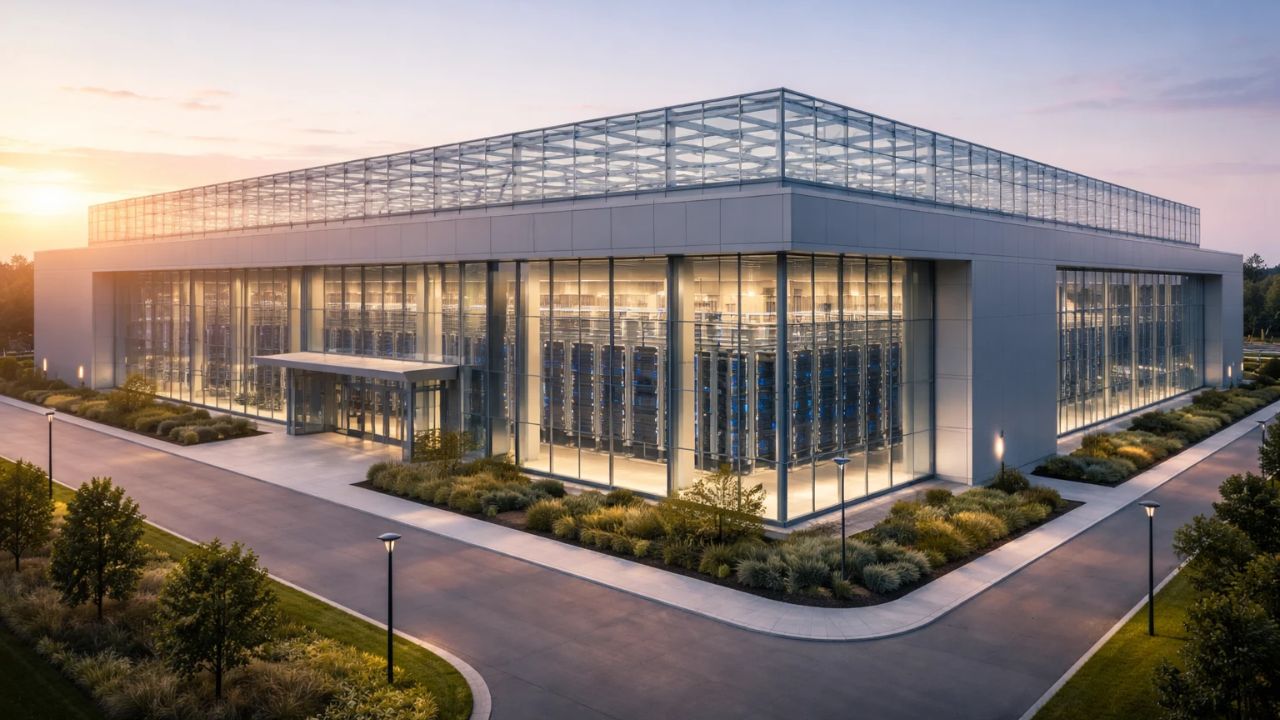
In the context of rapid growth in digital services, businesses require stable and predictable infrastructure. SaaS platforms, fintech projects, e-commerce, gaming services, corporate ERP and CRM systems – all of them demand high availability, minimal latency, and compliance with regulatory requirements.
One of the infrastructure deployment models is a colocation data center, including professional colocation server services for companies that need full control over their hardware. Despite the popularity of public cloud solutions, colocation remains in demand in Europe, especially in Frankfurt – the largest internet hub in the region. Let us examine what it is, how colocation works, and in which cases it becomes a strategically advantageous solution.
What is a colocation data center in simple terms
A colocation data center is a professional facility where a company places its own server equipment.
It is important to understand the key principle:
- the equipment belongs to the client
- the infrastructure (building, power supply, cooling, internet connectivity, physical security) belongs to the data center operator
In other words, a business purchases or leases servers and then installs them in a specialized facility with industrial-grade engineering infrastructure.
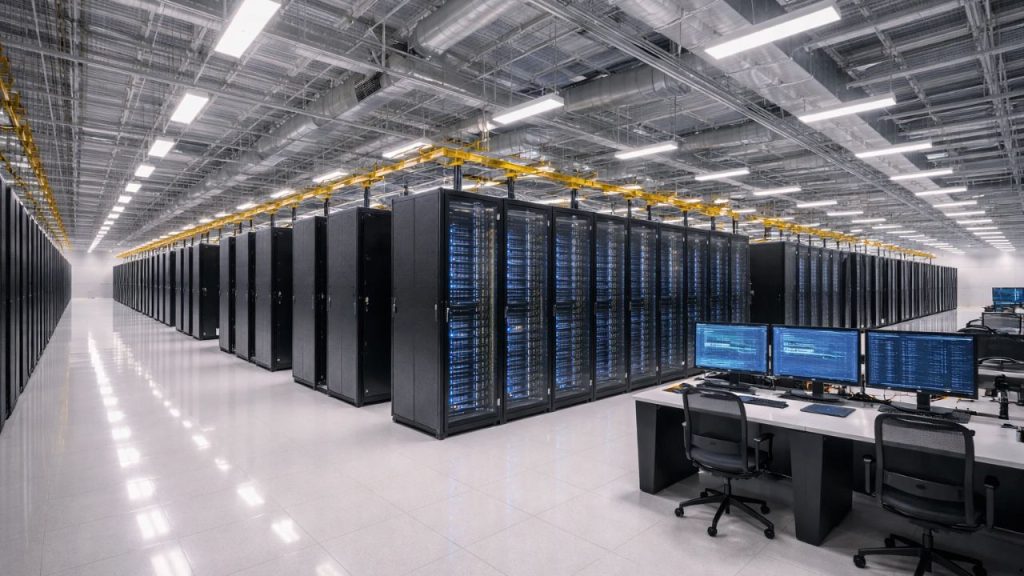
The data center provides:
- guaranteed power supply (often with Tier III level redundancy or higher)
- backup diesel generators
- uninterruptible power supply (UPS) systems
- industrial cooling systems
- 24/7 physical security
- access to backbone internet carriers
The company retains full control over its hardware without bearing the costs of building and maintaining its own server room.
How colocation works in practice
The operational model is fairly straightforward:
- The company purchases servers and networking equipment.
- It signs an agreement with a data center operator.
- The equipment is installed in a rack.
- It is connected to power supply and internet channels.
- The company manages the servers independently or uses additional support services.
Deployment can take different formats:
- renting individual units (for example, 1U, 2U)
- half rack
- full rack
- dedicated area or cage
The larger the volume of equipment, the more extensive the deployment format becomes.
Why Frankfurt is a key hub for colocation
Frankfurt am Main is considered the digital center of Europe. It hosts DE-CIX, the largest internet exchange point in the region, through which a significant share of European traffic passes.
Advantages of deployment in Frankfurt:
- minimal latency across Europe
- high concentration of telecom carriers
- direct connections to cloud platforms
- strict security standards
- well-developed energy infrastructure
For this reason, many international companies choose colocation specifically in this region, even if their business is focused on other EU countries.
How colocation differs from cloud and dedicated servers
- Colocation vs Cloud. In the cloud model, the client rents virtual resources. The hardware belongs to the provider. In colocation, the client owns the physical server.
- Colocation vs Dedicated Server. When renting a dedicated server, the hardware belongs to the provider. In the colocation model, the server belongs to the client.
The key difference is the degree of control. Colocation is suitable for companies that need to optimize dedicated server performance while retaining full hardware control.
- use custom hardware configurations
- install specific equipment
- comply with internal security standards
- operate with predictable, constant workloads
Infrastructure components of a colocation data center
A modern data center is a complex hardware engineering setup designed to support high availability and performance.
Key elements include:
- Power supply. Multiple independent power feeds, N+1 or 2N redundancy, diesel generators.
- Cooling. Industrial cooling systems, hot and cold aisle containment, humidity control.
- Network infrastructure. Access to multiple Tier-1 carriers, cross-connects, connections to internet exchange points.
- Physical security. Multi-layer access control systems, video surveillance, biometrics.
- Monitoring. 24/7 monitoring of all engineering parameters.
Thanks to these components, a data center can ensure an SLA of 99.99% and higher.
Who is a colocation data center suitable for
Colocation is particularly in demand among the following types of companies:
- SaaS platforms. Stable workloads and a long-term development strategy.
- Financial institutions. High security requirements and strict regulatory compliance.
- iGaming operators. Low latency and network stability are critical for user experience.
- Industrial and IoT projects. The need to deploy specialized hardware.
- Corporate enterprises. When infrastructure is considered a strategic company asset.
The economic model of colocation
Colocation costs consist of several components:
- rack space rental
- power consumption
- internet connectivity
- additional services (Remote Hands, Smart Hands)
It is important to note that for long-term operations, colocation often becomes more cost-effective than cloud solutions under consistently high workloads. In addition, the hardware remains a company asset and can be used for 3–5 years.
Additional services within colocation
Most operators offer:
- Remote Hands – physical tasks performed according to the client’s instructions
- Smart Hands – more complex technical tasks
- Cross-connects
- connections to cloud providers
- migration services
This allows businesses to manage their infrastructure even without having a physical presence in the country where it is deployed.
Risks and limitations
Despite its advantages, colocation requires:
- initial investment in hardware
- an in-house IT team
- capacity planning for future scaling
If a business requires instant scalability without capital expenditures, the cloud model may be more suitable.
Balance of control and reliability: the role of colocation in modern IT architecture
A colocation data center is a deployment model in which a company retains full control over its hardware while using the professional infrastructure of a data center facility.
For the European market, especially for deployment in Frankfurt, colocation remains a strategic solution for businesses focused on:
- Stability
- predictable costs
- high performance
- data control
In the era of hybrid IT architectures, colocation does not compete with the cloud but complements it, forming a resilient and scalable infrastructure strategy.