

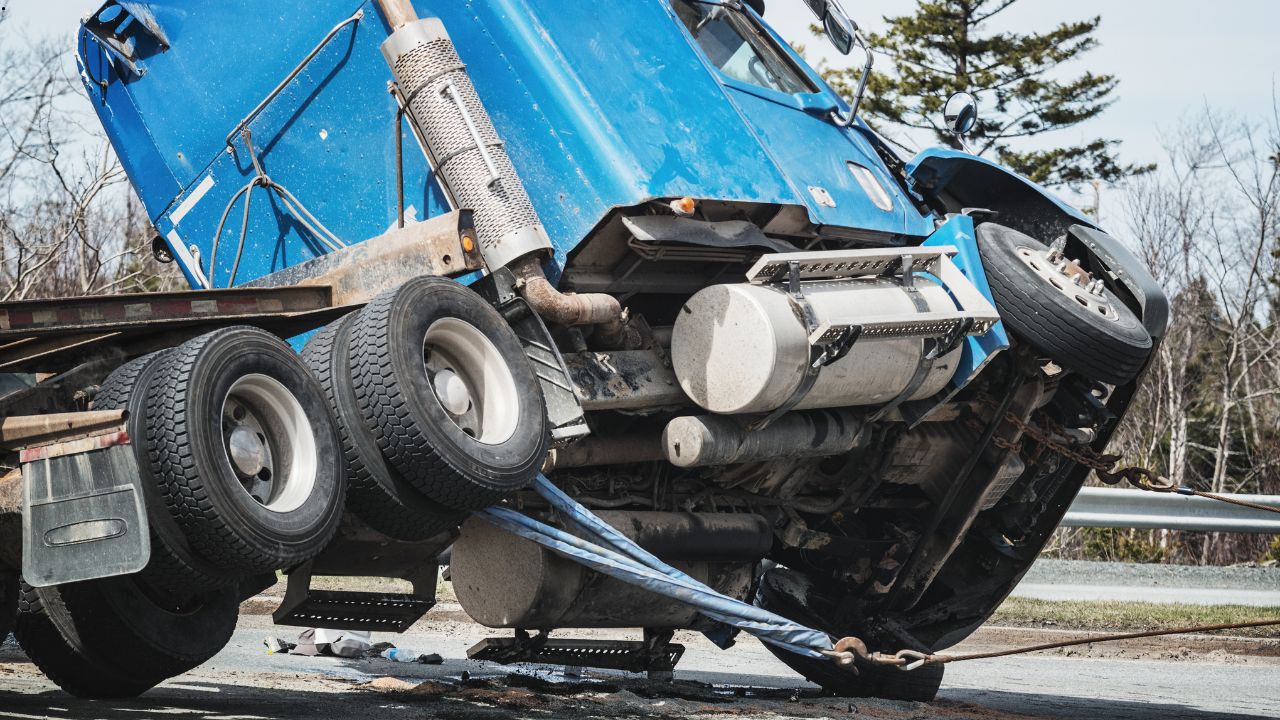
Truck accidents happen fast. One moment you are driving down the highway, and the next, your world is flipped upside down. If you have been in a crash involving a commercial truck in Oklahoma, you are likely dealing with a lot right now. Pain, confusion, missed work, and a pile of medical bills can all hit you at once.
The good news is that you do not have to face this alone. Understanding your rights and taking the right steps can make a big difference in what happens next. This guide walks you through everything you need to know after a truck accident in Oklahoma.
How Truck Accidents Are Different From Regular Car Crashes
A lot of people assume that a truck accident is just like a car accident, only bigger. But that is not really true. Truck accidents are far more complex, and the injuries are usually much more serious.
For starters, a loaded commercial truck can weigh up to 80,000 pounds. When something that heavy crashes into a regular passenger vehicle, the damage is almost always severe. On top of that, multiple companies and parties are often involved. There is the driver, the trucking company, the cargo loader, and sometimes even the truck manufacturer. Each one may try to point the finger at someone else.
Furthermore, trucking companies are governed by federal regulations set by the Federal Motor Carrier Safety Administration. These rules cover things like how many hours a driver can be on the road, how trucks must be maintained, and how cargo must be secured. When these rules are broken, it becomes a key part of the legal case.
That is exactly why having an Oklahoma Truck Accident Attorney in your corner matters so much.
Common Causes of Truck Accidents in Oklahoma
Oklahoma has a large network of interstates and highways. Roads like I-40, I-35, and I-44 carry a massive amount of commercial truck traffic every single day. With that volume comes risk.
Some of the most common causes of truck accidents in the state include:
- Driver fatigue – Truck drivers often work long shifts and push past safe hours to meet delivery deadlines
- Distracted driving – Using a phone, eating, or adjusting GPS while behind the wheel
- Speeding or aggressive driving – Especially dangerous given how long it takes a heavy truck to stop
- Improper cargo loading – Unbalanced or unsecured loads can cause a truck to tip or jackknife
- Poor vehicle maintenance – Worn brakes, bad tires, or broken lights that were never fixed
- Driving under the influence – Sadly, this is more common than most people realize
In many of these situations, the truck driver was not the only one at fault. The trucking company may have pressured the driver to skip rest breaks. A loading crew may have done a careless job securing the freight. Sorting all of this out takes real investigation, and that is something a skilled attorney handles on your behalf.
Steps to Take Right After the Accident
The moments right after a truck crash are chaotic and stressful, and many victims don’t realize how critical it is to have an attorney by their side early on. Even so, the steps you take early on can have a direct impact on your case. Here is what you should try to do:
Call 911 first. A police report is one of the most valuable pieces of evidence in any accident case. Make sure law enforcement comes to the scene and documents what happened.
Get medical attention right away. Even if you feel fine, go see a doctor. Some injuries, like internal bleeding or a concussion, do not show up immediately. A medical record also creates an official link between the crash and your injuries.
Document everything you can. Take photos of the vehicles, the road, your injuries, any skid marks, and the surrounding area. If there are witnesses nearby, ask for their contact information.
Do not speak with the trucking company’s insurance adjuster alone. They may call you quickly and sound very friendly. But their goal is to limit what they pay out. You should speak with a lawyer before giving any recorded statement.
Contact an attorney as soon as possible. The sooner you get legal help, the better your chances of preserving important evidence.
Who Pays for Your Damages?
This is one of the most common questions people have after a truck accident. The answer depends on what caused the crash and who was involved. However, in most cases, the trucking company’s insurance policy is the primary source of compensation.
Commercial trucks are required to carry much larger insurance policies than regular drivers. That means there is more money available to cover serious injuries. However, it also means the insurance company has a strong motivation to fight your claim hard.
Through a successful claim, you may be able to recover compensation for:
- Medical bills, both current and future
- Lost income if you missed work or can no longer do your job
- Pain and suffering
- Emotional distress
- Property damage to your vehicle
- Wrongful death damages if you lost a loved one in the crash
These amounts can be significant, especially when permanent injuries are involved. Therefore, it is critical to have someone who knows how to calculate your full damages and fight for every dollar you deserve.
Oklahoma’s Time Limit to File a Claim
Oklahoma law gives most personal injury victims two years from the date of the accident to file a lawsuit. This is called the statute of limitations. If you miss this deadline, you lose your right to seek compensation, no matter how strong your case is.
Two years might seem like plenty of time. But in reality, building a strong truck accident case takes time. Evidence needs to be gathered early. Witness memories fade. Trucking companies are only required to keep certain records for a limited period. So, the sooner you start, the stronger your position will be.
An experienced Oklahoma Truck Accident Attorney can act quickly to preserve key evidence, including driver logs, GPS records, inspection reports, and dashcam footage, before it is lost or destroyed.
Why Local Legal Knowledge Matters
Not all truck accident lawyers are the same. Someone who handles these cases in Oklahoma regularly will understand the local court system, know how juries in the state tend to think, and have experience dealing with the specific insurance companies and trucking firms that operate in this region.
Oklahoma also has specific rules around comparative fault. This means that even if you were partly responsible for the accident, you may still be able to recover compensation. However, your recovery will be reduced based on your percentage of fault. Navigating this requires careful legal strategy, not guesswork.
Working with an attorney who knows Oklahoma law inside and out gives you a real advantage. They will not just file paperwork. They will build a solid case, negotiate firmly, and, if needed, take the fight to court.
What to Expect When You Work With an Attorney
Many people hesitate to call a lawyer because they assume it will be expensive or complicated. In truth, most truck accident attorneys work on a contingency fee basis. That means you pay nothing upfront. The attorney only gets paid if you win your case.
When you first reach out, most attorneys offer a free consultation. During that conversation, they will listen to what happened, review the basics of your situation, and give you an honest idea of what your case might be worth.
From there, if you decide to move forward, your attorney will handle the investigation, gather evidence, work with medical and accident reconstruction experts, deal with the insurance companies, and negotiate a fair settlement. If a fair offer is not on the table, they will take the case to trial.
You focus on getting better. They handle the rest.
You Have Rights – Use Them
Truck accidents can leave lasting marks, physically, emotionally, and financially. The companies involved have legal teams working to protect their interests from day one. You deserve the same level of protection.
Reaching out to an Oklahoma Truck Accident Attorney costs you nothing at first, but it can make an enormous difference in the outcome of your case. Do not wait until it is too late to act. Get the help you deserve, and start the road to recovery on solid ground.